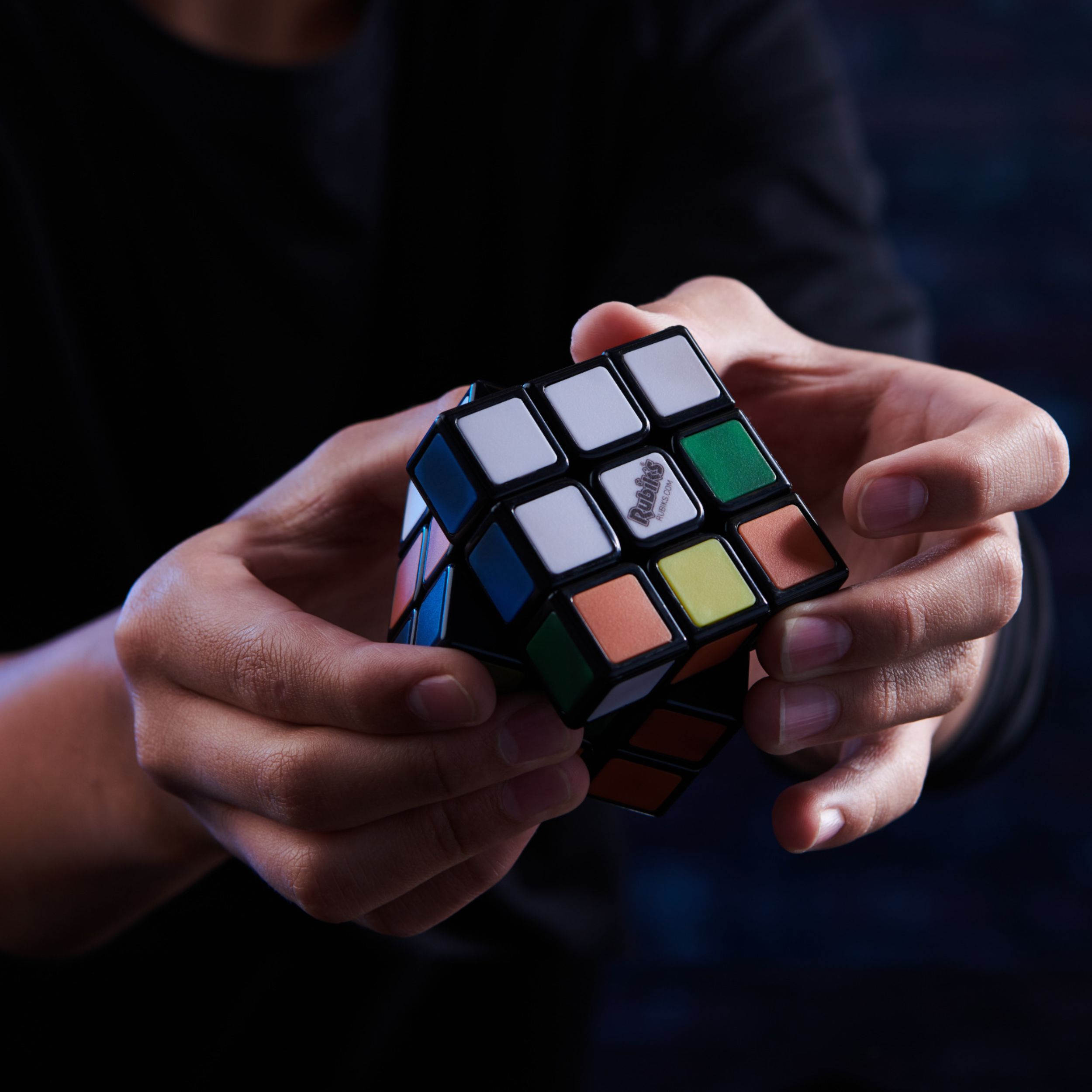
Rubik's Cube
Speedcubing is a meditative exercise that tests hand-eye coordination, muscle memory, and spatial intuition. Memorizing and executing algorithms in milliseconds turns complex combinatorics into a satisfying flow state.
Drag the cube with your mouse or finger to rotate it in 3D
18.35s
Achieved with a Moyu WRM v10.
22.85s
Stable session average.
My Puzzle Collection
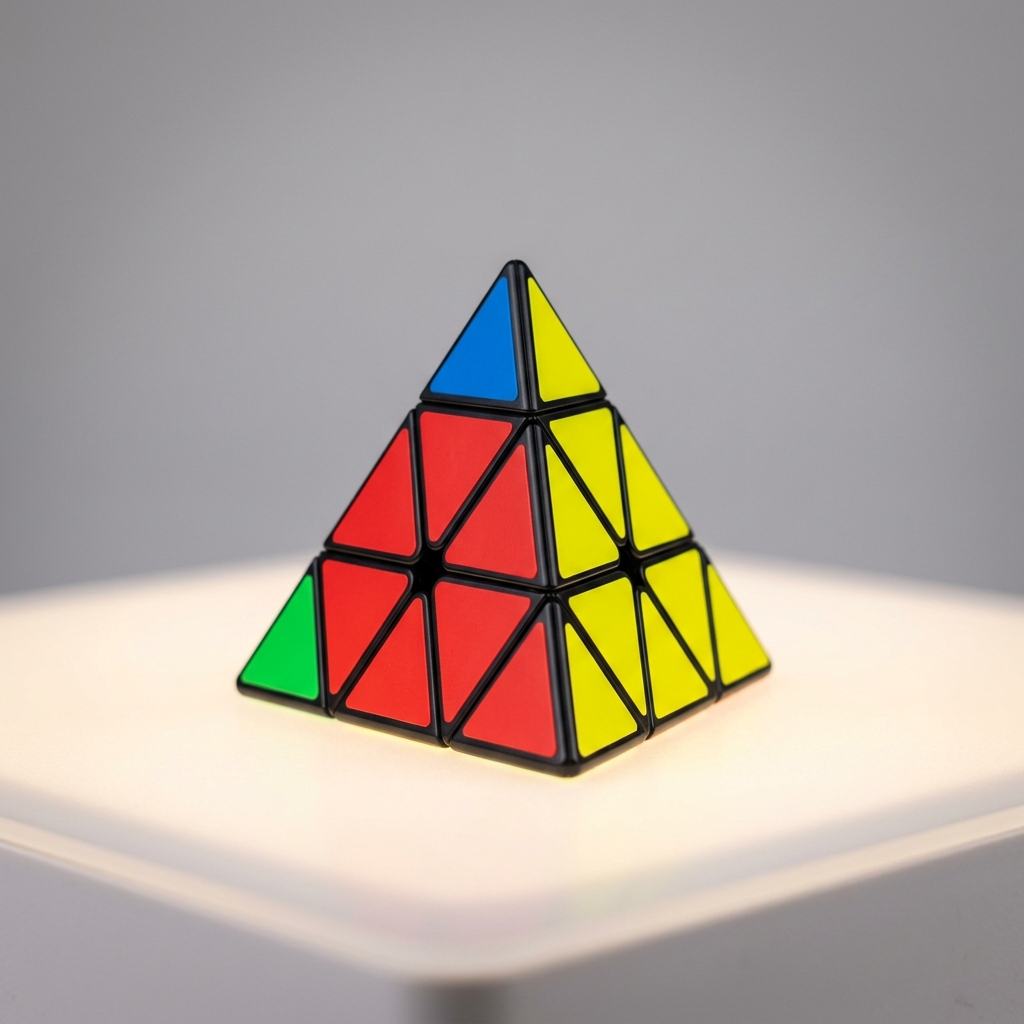
Pyraminx
EasyTetrahedral Shape
A corner-turning triangular pyramid puzzle. Solved with simple intuitive transitions and last layer algorithms.
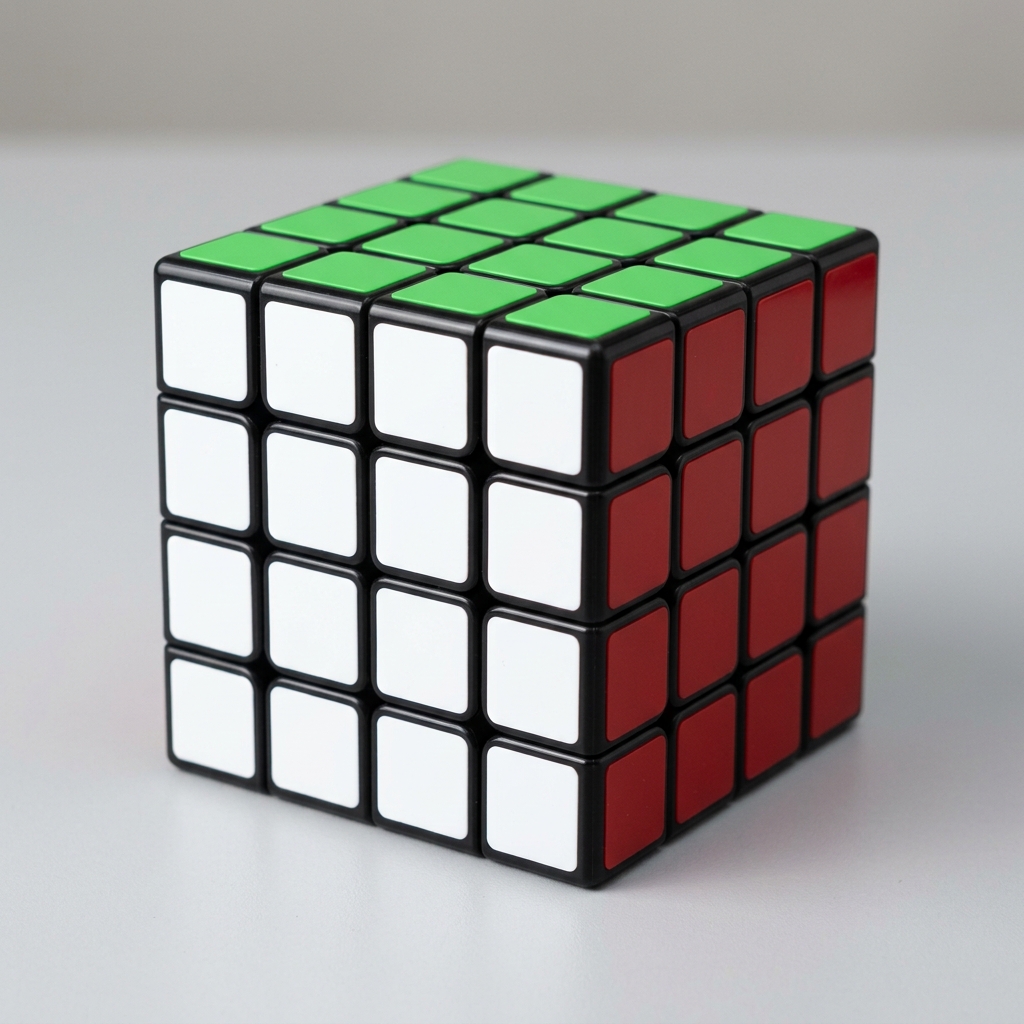
4x4x4 Cube
HardRevenge Cube
Double the layer complexity of a 3x3. Solved using the Yau method: pairing centers, building cross edges, then reducing to 3x3.
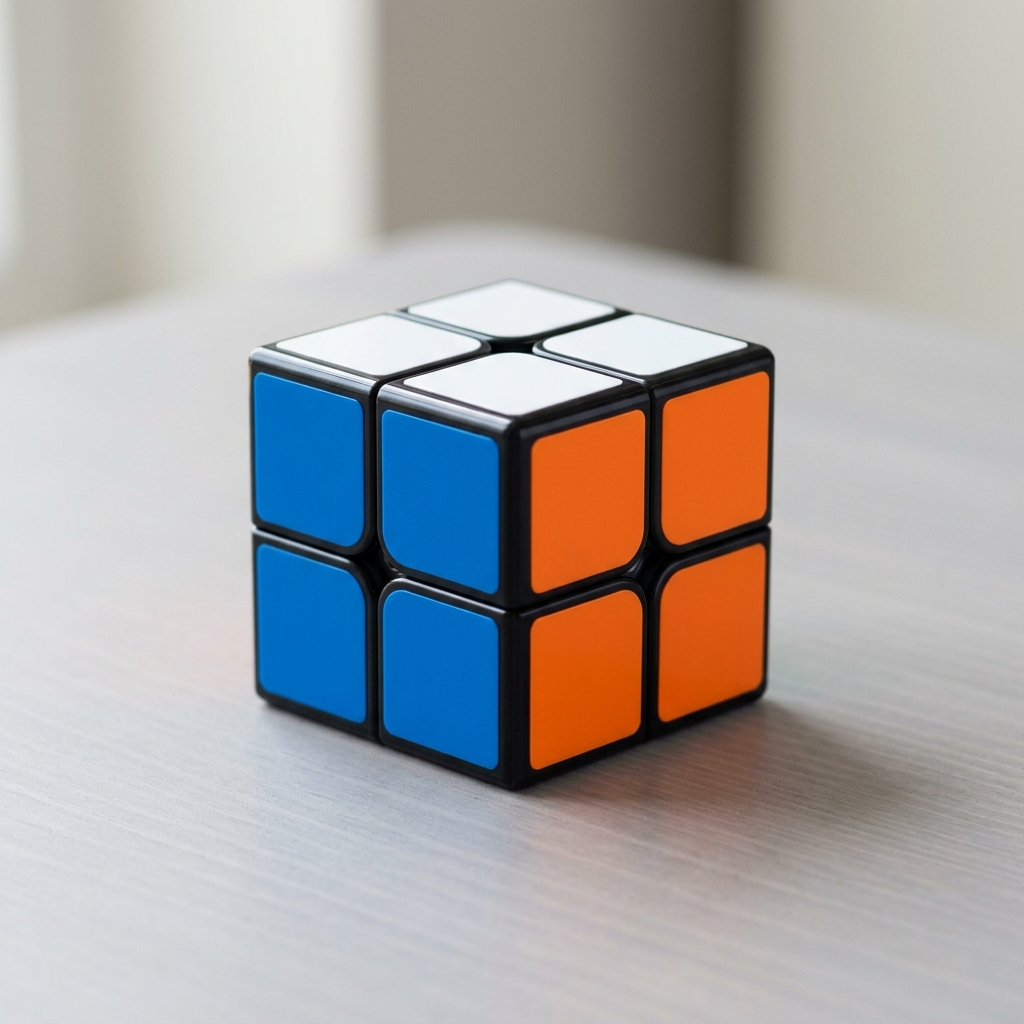
2x2x2 Cube
EasyPocket Cube
A pure corner-pieces puzzle. Fast, fun, and solved using the Ortega method: solving bottom layer, orienting top, then permuting both.

Skewb
MediumCorner-Turning Cube
A skew axis cube that rotates around the corners. Solved with intuitive pairing and repeating simple 4-move algorithms (Sledgehammer).

Cylindrical Cube
MediumShape Modification
A 3x3 mechanism modified into a cylinder. Scrambling it deforms the shape, creating unique optical illusions and shape conflicts.
Megaminx
HardDodecahedron Shape
A 12-sided puzzle. Solved using an extended CFOP method: solving the inner pentagon layers, then reducing to 3x3.
While I own several puzzles, my active practice is fully focused on speedsolving the 3x3x3.
Resolution Method: CFOP
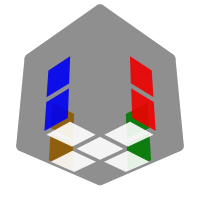
Cross
Solving the 4 edge pieces on the bottom layer (white) aligned with their respective side centers.
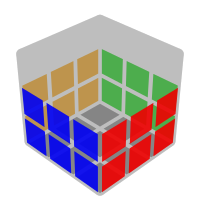
F2L (First Two Layers)
Simultaneous insertion of a bottom corner and its corresponding edge to complete the first two layers together (4 pairs total).
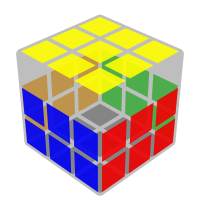
OLL (Orientation Last Layer)
Orienting all top layer pieces to make the upper face completely yellow, using one of 57 algorithms.
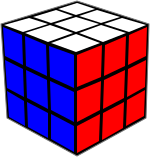
PLL (Permutation Last Layer)
Moving the oriented top layer pieces to their final positions without breaking the orientation. Solved using 21 distinct algorithms.
end of detail